Showing posts with label henry grover jr. Show all posts

Thursday, 8 January 2015

Selling Aftermarket Glass Treatments

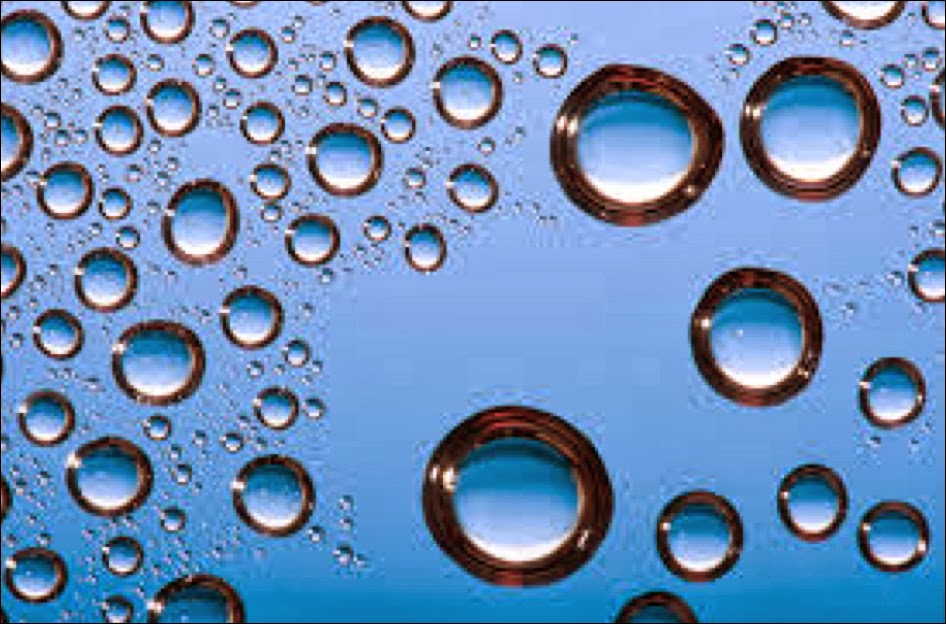
Contact of water droplet with hydrophobic glass after an aftermarket treatment has been applied.
Selling Aftermarket Glass Treatments (by Henry Grover Jr): Glass treatments are professional applications of thin film chemicals at ambient temperature. They usually are only a couple of molecules deep. If the polymers form a covalent bond with the oxygen atoms at the surface of the glass, the treatment is said to be "part of" the glass. Some of these companies are very emphatic about not using the terms sealant and coating. They also tend to focus on their claim that their product has been tested by many independent labs which specialize in such analytical work. They will elucidate at length about the applications of their products, and mention various well known buildings that have been treated. I can think of one company in particular that has a patent on their technology which claims to use two different chemical treatments. The first one which is only about a couple polymers deep forms a covalent bond with the oxygens at the surface of the glass. Then they have a second 'different' polymer that is chemically bonded to the first.

This patented technology is supposed to give their proprietary treatment/product superior longevity and resistance to UVC and alkali attack. They also have reports of independent tests that they can provide to anyone who asks which prove beyond doubt that their technology and product is the absolute best. Their are other companies yet that will just simply state that their product has been around for years, and is very well established in the marketplace. They will focus on this fact not even getting into any independent tests or alternate patented technology. Further;..,there are even more companies that have copied these companies in creating products that can be used not just on glass, but metal, plastic, and other surfaces too. Some of them are OK. But others are not.  Their effects last for only a few days. They certainly do not form covalent bonds since they are not "surface specific".

Their are those products too which are applied to glass in the float glass factory when the glass is manufactured. I have been told these are pyrolytically bonded to the glass and are in fact truly permanent. Just the other day I was cleaning windows at my Glass Shop and overheard a sales pitch regarding a brand new shower door enclosure. To wrap it up the salesperson said, "And I also seriously suggest using a glass that has a stain resistant factory treatment". If you are a professional applicator of aftermarket glass treatments you will have a difficult time getting in the front door when marketing to the glass world. Since they have been brainwashed already to believe that the treated glass they get from glass manufacturers like Guardian is the absolute best, and there is nothing that you could provide that could even come close to that quality.

So what do we do? The very first thing is to focus on aftermarket glass. Don't even get into any discussions with the glass world about the actual quality of various treatments and technologies used on new glass. But rather just focus on your own knowledge of this field, and your expertise in the application of the right treatment for the desired effect. Which effect might be stain resistance, scratch resistance, an easy clean surface, hydrophobicity, or hydrophylicity. Give a guarantee, and a price.  Do not discuss the name of the product you will be using.  Nor discuss the actual process that you will be using.  The technology that you use is proprietary, and there is no need for you to discuss it in detail with anyone. It would be good at this point however to discuss the different benefits of glass treatments. This can be done verbally at the moment. It can also be done with a flyer or info-letter.

Your guarantee should be specific to the desired effect of the treatment and what the application will be. Is the customer mostly concerned with exterior scratch resistance? Are they in search of a treatment to make cleaning interior shower glass enclosures much easier? Are they looking for an easy clean treatment for the exterior using a water fed pole? Or do they want an exterior easy clean treatment where the glass will be wiped with a micro fiber towel? Are they in search of a treatment that will make removing hard water deposits that are being caused by a sprinkler system or efflorescence of the exterior building facade much easier over the months and years to come? All of these different applications require different treatments/products, and different application techniques. Some applications will even demand a different guarantee, or no guarantee at all! I don't think any manufacturer of a glass treatment/product will tell you anything that I have written in this paragraph. But it is all very true.  

Before you get into this niche business it is necessary to become familiar with the different products that are currently on the market. You should also become familiar with some very "grassroots tests" that will tell you what you need to know about which application you are looking at. There will be new treatments/products that will continue to hit the market. Some will come along as a franchise, some as a professional product at a higher than normal cost, and some as a retail item available at a Lowes or Home Depot. You need to be ready to test out these new products so you can add them to your company list of chemical tools. You wouldn't use the same window cleaning tools on every window. So why should you use the same glass treatment tool for every application/job.

Written by Henry Grover Jr.

Henry Grover Jr is currently involved in R&D writing. He writes a column for the Window Cleaning Business Owner magazine called SURFACES, and manages a sub-forum for the Window Cleaning Resource with the same title SURFACES. He is also working in developing what he calls custom products for both the Window Cleaning Industry and others involved in the maintenance, restoration, and preservation of window glass. He has given seminars in the past on glass stain removal/identification techniques, wrote tech articles for the American Window Cleaner Magazine, traveled for consulting work on several famous buildings, and worked in the capacity of a consultant for many window cleaning companies in different parts of the US. 

Go to www.glass-smart.blogspot.com to read more.

Wednesday, 9 April 2014

Diamonds Enhancing Image Of Window Cleaning

A jewellers diamond - Diamonds can dramatically enhance the image of a Window Cleaning Company.
www.glass-smart.blogspot.com
The Vision Glass Detailer (Written by Henry Grover Jr.): Diamonds can dramatically enhance the image of a Window Cleaning Company. They can also enhance our service and increase our annual profits. By making it possible to clean glass more effectively in less time. Restoring glass by removing scratches, abrasions, hard water spots, and acid damage. Further;...glass can now be coated and thus protected with thin films of diamond.

The picture above is a jewelers diamond. The one below is a false color micrograph of polycrystalline diamond particles used as superabrasives. The last picture is a micrograph of a weathered window glass surface. We have no use for jewelers diamonds. Yet polycrystalline diamond particles or super abrasives are quite useful. Since they can be used to effectively clean and restore glass surfaces. The picture to the far right shows quite vividly how porous ordinary glass surfaces can become over time. Oily fingerprints, pizza grease, or just dust will fill these holes, valleys, and tunnels. Making it impossible to effectively clean the glass using typical cleaners. But when we add a microcrystalline super abrasive to our cleaning solution we get much better results. Those ball like polycrystalline diamond particles with hundreds of sharp edges each, will reach down into the surface and dig out all acidic contaminants.

A false color micrograph of polycrystalline diamond particles used as superabrasives.

Polycrystalline diamond particles are also quite effective at lapping flat glass with the right tools. Creating what are called precision surfaces. Such particles are very effective owing to their size, shape, purity, and hardness. Some are even friable. Which means they actually break up into smaller particles when used. These smaller particles give the surface a smoother feel and appearance. So diamond can be used to restore window glass.

Ways have been found to ‘functionalize’ certain diamond particles with specifically reactive chemical species. These custom made particles will then bond to themselves and the chemistry of precision glass surfaces. Forming protective thin films. I put it this way because I personally do not believe the manufacturers of this technology adequately emphasize the need to properly clean glass on a microscopic level. Simply because engineering precision glass surfaces requires more expertise which limits the size of their market. Even the professional market just wants a ‘wipe on wipe off’ product. In reality this is not practically possible.

A micrograph of a weathered window glass surface.
I am just beginning to bring the technology of super abrasive engineering of precision glass surfaces to the window cleaning industry. This is a field that has existed for a long time in the optics industry. It is highly scientific. If it were not we wouldn’t be able to look out into the unbelievable depths of space at the stars, galaxies, and quasars. Or down to the farthest reaches of the microcosm where living cells thrive, divide, and work together to create our bodies. Quality glass surfaces are critical to the proper functioning of lenses and mirrors. They are also to our work. My hope is that many will follow me.

Henry Grover Jr is currently involved in R&D writing. He writes a column for the Window Cleaning Business Owner magazine called SURFACES, and manages a sub-forum for the Window Cleaning Resource with the same title SURFACES. He is also working in developing what he calls custom products for both the Window Cleaning Industry and others involved in the maintenance, restoration, and preservation of window glass. He has given seminars in the past on glass stain removal/identification techniques, wrote tech articles for the American Window Cleaner Magazine, traveled for consulting work on several famous buildings, and worked in the capacity of a consultant for many window cleaning companies in different parts of the US. 

Go to www.glass-smart.blogspot.com to read more.

Monday, 10 March 2014

Pure Cerium Oxide Compound

Cerium Oxide powder is made from the two minerals bastanite and monazite. Bastanite is a complex fluorocarbon, and monazite is a phosphate.
http://www.glass-smart.blogspot.com.es/
The Vision Glass Detailer (Written by Henry Grover Jr) - Removing Light Scratches and Blemishes with Pure Cerium Oxide Compound: Since the early fifties Cerium Oxide powders have been used in the glass industry for removing slight scratches and other blemishes from vehicular and architectural glass. If you venture into the glass caves of most any shop these days you will find a small bottle of cerium powder on the back shelf. Along with a circular sponge pad about an inch thick which is used on a rotary drill motor. The cerium is usually mixed with a little water, applied to the glass, and then worked for several minutes with the drill. This is actually somewhat effective at removing scratches that are barely visible but cannot be felt with a fingernail. If the process takes too long it is not continued and is given up. Simply because it is not considered cost effective.

What I want to accomplish by means of this article is to show that there are more efficient ways to remove light scratches and blemishes from glass. That means in other words that we can do the same thing or better in less time. Lets look first at the polishing pad itself. I use a ring shaped pad made of hard felt. Not a light weight foam. The felt fibers have microscopic hooks that catch the polishing particles and help to drive them into the glass surface. Felt is also much more efficient at holding onto said particles so they can be used over a greater time. An optimum sized felt ring used for removing light scratches should have an outside diameter of three inches, and an inside diameter of one and a half inches. It should also have a crack and peal backing so it can be quickly applied to a thin aluminum or wooden disk. The disk has a small universal joint centered between itself and the shaft of the drill motor. This makes it possible to operate the drill at speeds in excess of 1200 rpms without the problem of “bobbing”. Which allows for perfect contact at all times.


The hard felt will more effectively drive the cerium particles into the glass surface. And since cerium is chemically reactive with glass, the higher temperatures that this more advanced process creates will accelerate that reaction. You will notice by feeling the new dry surface with a dry fingertip, that it is much more rough than the original window glass. This proves that the polish is cutting into the glass.

The compound that I use comes in a four ounce container ready to use. It is a wet water based compound that can be easily transferred to an oral syringe. To remove light scratches you must first clean the glass well. Then you can use the compound straight or along with some water. You might apply some clean soapy water to the glass. Then put several drops of compound directly onto the hard felt ring. Next put the polishing ring against the glass and start polishing. To check the surface just clean the cerium and inspect. If you need to continue just apply more water and resume. If you want you can polish with the compound alone. Although using soapy water will stretch out the compound much further.

The compound I have chosen is based on an ultra pure powder designed specifically for one step glass polishing. It has a high purity rating with just the right shaped particles. Which have the tendency of rubbing the glass more then cutting it as diamond does. Cerium will always create a much smoother surface. When the powder is suspended in an eco-friendly water based medium it will actually improve over time, and be much easier to use. I hope you like it. The cost is $7.95 for a four ounce wide mouth container. Which comes with an oral syringe. Also there is a four dollar shipping and handling charge. So $11.95 total. Polishing disks and felt rings are custom built. 

Henry Grover Jr is currently involved in R&D writing. He writes a column for the Window Cleaning Business Owner magazine called SURFACES, and manages a sub-forum for the Window Cleaning Resource with the same title SURFACES. He is also working in developing what he calls custom products for both the Window Cleaning Industry and others involved in the maintenance, restoration, and preservation of window glass. He has given seminars in the past on glass stain removal/identification techniques, wrote tech articles for the American Window Cleaner Magazine, traveled for consulting work on several famous buildings, and worked in the capacity of a consultant for many window cleaning companies in different parts of the US. 

Go to www.glass-smart.blogspot.com to read more.

Friday, 24 January 2014

Testing Glass Coating Products

Eliminate all traces of certain hydrophobic glass coatings.
http://glass-smart.blogspot.com.es/
Testing Glass Coating Products (written by Henry Grover Jr): We are professionals in what we do. So if we are to sell a coating application for window glass we should be able to explain with confidence how long the application will last, and under what conditions it will degrade. We also should be able to define exactly what the benefits will be to the customer. Because it is these benefits that we are selling. There are many different competing products out there. Some of them the customer has direct access to at the local Walmart. Others are now made available on brand new windows, shower doors, and mirrors. We should be concerned with these competing products. Since we will have to offer something better. We will have to offer a personal and professional guarantee.

Longevity is a concern. Some products will wear off in a single day. Others will last for a month. Then there are some that are advertised to last for six months. I have a running test on one that goes back ten years. On dark glass even. It is the suns UVC radiation that is mostly responsible for degrading coatings. Which by the way can be either hydrophobic or hydrophillic. As is demonstrated by the picture above this is determined by the size of water drops. A hydrophillic surface will show much larger drops. If you were to sell a coating as a professional applicator you absolutely would not want to tell the customer the brand name of the product used. In my opinion. The reason is very simple and plain. Each product out there has its own unique advantages. One advantage might be scratch resistance, another longevity, another hydrophylicity, and yet another is resistance to alkali degradation by mineral deposits/hard water spots. If I were to sell a coating application service at a substantial price, I would need direct personal experience with it. So that I could guarantee that it will do what I am applying it for. Sometimes it is possible to demonstrate the application. Such as the hydrophobic/hydrophillic balance. Or scratch resistance. Or even alkali degradation. Longevity is probably the most difficult. Unless you had a very powerful UVC lamp.

Lets look at alkali attack. I have proven that alkali attack at 9 to 9.5 pH will effectively eliminate all traces of certain hydrophobic glass coatings. Simply by putting small two inch droppings of concrete on a test plate treated by the coating in question. Leave the concrete on the horizontal test plate for a full 24 hours then remove. By running the plate under the tap it will become instantly apparent whether the coating has stood up to attack. Hard water reaches a very high pH the last few minutes of a water drops life as the water poofs away. Leaving behind mineral deposits. This high pH is what degrades the coating causing the mineral deposits to cling to the glass surface. If someone hires us to keep spots from sticking to their glass this kind of information would be helpful. But not absolute! We can only be absolutely confident (and get the bigger buck) by proving to the customer that our service will keep spots from sticking to their glass. This can only be done by means of a timed test. If the spots are coming from the efflorescence of the buildings exterior façade the option of diverting the sprinkler heads doesn’t exist.

What about scratching? I developed a very simple test for scratching. Definitely not an ASTM test. Where I just coated one side of a mirror with the product in question. Then I took a broken piece of glass and purposely tried to scratch the entire surface. One product I tested stood out. All other products failed really bad. My first question after this discovery was, will this product stand up to sand in the wind on a windshield? So;...I duplicated sand in the wind by performing a side by side test using a sandblaster set on low. It failed completely. You might look for independent studies done on certain products you are thinking of buying. My advice here however is to buy the product, or get a piece of glass in the mail that has been treated with the product you are thinking of buying, and test it yourself. Believe in your own ability to figure it out. It is your own personal confidence in the service that you are offering that will sell it. Every time!

Henry Grover Jr is currently involved in R&D writing. He writes a column for the Window Cleaning Business Owner magazine called SURFACES, and manages a sub-forum for the Window Cleaning Resource with the same title SURFACES. He is also working in developing what he calls custom products for both the Window Cleaning Industry and others involved in the maintenance, restoration, and preservation of window glass. He has given seminars in the past on glass stain removal/identification techniques, wrote tech articles for the American Window Cleaner Magazine, traveled for consulting work on several famous buildings, and worked in the capacity of a consultant for many window cleaning companies in different parts of the US. 

Go to www.glass-smart.blogspot.com to read more.

Wednesday, 11 December 2013

Talking Yard Signs & Hydrophobics

http://moleandjersey.com/
The Mole And Jersey Show - Episode 4: The Mole & Jersey Show: A new kinda show has come to town & we've liking it! A lot like Window Cleaning Nation only with a reckless abandon & inside jokes that probably only window cleaners would get. Last weeks episode 4 focused on a company in the States called Sign2Day owned by Tim Fields that sells signs directly to window cleaners & pressure washers.
Enjoy... the youtube video is below & as always I recommend you watch it directly at the link by clicking the youtube link in the bottom right-hand corner.


Henry talks about hydrophobic glass in the industry.
http://glass-smart.blogspot.com.es/
Creating Hydrophobic Glass (by Henry Gover Jr):  By its very nature window glass is hydrophilic. It loves water. So much so that it is necessary to heat the surface to at least seven hundred degrees Fahrenheit to completely eliminate all water vapor. Or we could make the surface hydrophobic with chemicals. The new surface serves as a microscopic barrier to water. This essentially stops any exchange reaction that routinely happens between the hydrogen atoms in water molecules and certain atoms in the glass surface. Put another way, such hydrophobic barriers stop the natural weathering process (etching) of window glass. Window Cleaners are well aware of this very interesting effect. When cleaning old storm windows it is always possible to tell the outside from the inside of a clean plate with both eyes shut. Just lightly feel both sides with your fingertip. Make sure the window is both clean and dry first. 

Over the years there have been many different products developed to make ordinary vision glass hydrophobic. Great interest has been shown by the owners of aircraft. These coatings make rain bead up and run off dramati-cally improving vision. They also help to keep windshields stain free and easier to clean. This is also true of window glass. Hard water stains are a constant problem these days. Acid rain is breaking up the minerals in the ground and dissolving the exterior concrete and brickwork of large buildings worldwide. Mineral deposits come from sprinkler heads and the leaching of concrete. They might be on the first level only or go up forty four floors. 

Hydrophobic glass - sometimes a problem for window cleaners.
Removing such stains safely requires much time and the correct technique. Which is very costly. Once removed however, the owner certainly doesn’t want their building to be marred again. Using the best hydrophobic product then is critical to prevent any new stains from locking on once again. Before attempting such a “restoration project” it would be a wise decision to hire a consultant who specializes in this type of work. The building should never be “acid washed”! Glass etchants such as hydrofluoric, sulfuric, or ammonium bi-fluoride can permanently damage the optical surface of window glass. They can also bring on lawsuits from the harm they do to the environment. Also they can do serious harm to those using them. 

Another interesting application of hydrophobic glass treatments is scratch resistance. If applied correctly there are some coatings that will stand up to broken glass used by vandals. Although not completely effective, they are very impressive. And will at least greatly minimize the scratch making it much easier to remove with an ad-vanced scratch removal system. 

So which one do you buy? Would you like to get in on this new technology? If so the first question you must answer is what is my application? Then don’t believe all the hype. If you want to find out if a certain product is go-ing to work for you then test it. Will it be used inside or on the outside in the direct sun? Some products are quickly degraded by ultraviolet rays. Is it intended for scratch resistance? Or is it going to be used just as a rain guard? If you are attempting to keep hard water stains from locking on to the window after the glass has been restored, you will need to experiment with several different products on the same window and allow several months to go by. 

Throughout this article I have not touched on the different chemistries used by the manufacturers of any product. This is because I believe it isn’t necessary. I believe it is much more important to understand what hydro-phobes are and what their potential use might be. It is also essential to know that each must be tested before used for each different application. 

http://glass-smart.blogspot.com.es/
Written ByHenry Grover Jr. - Henry Grover Jr is currently involved in R&D writing. He writes a column for the Window Cleaning Business Owner magazine called SURFACES, and manages a sub-forum for the Window Cleaning Resource with the same title SURFACES. He is also working in developing what he calls custom products for both the Window Cleaning Industry and others involved in the maintenance, restoration, and preservation of window glass. He has given seminars in the past on glass stain removal/identification techniques, wrote tech articles for the American Window Cleaner Magazine, traveled for consulting work on several famous buildings, and worked in the capacity of a consultant for many window cleaning companies in different parts of the US.

Thursday, 5 December 2013

Bursting The Bubble - Window Cleaning Soaps

Henry bursts the bubble behind window cleaning soaps.
Window Cleaning Soaps (written by Henry Grover Jr) - Back at the turn of the 19th century Window Cleaners used TSP or trisodium phosphate. Some still do. Today however, for a variety of different reasons, the greater majority have moved away from chemicals like this and are now using what most simply call ‘soaps’. These are technically known as synthetic detergents. I call them syn-dets. Dishwashing soaps are made from different blends of different syn-dets. The syn-dets have been grouped into five large families. These are the nonionics, anionics, cationics, amphoterics, and zwitterionics. Most are based on hydrocarbon chains. Yet there are very specialized ones that are based on fluorine and silicon. Hence we have Teflon and silicone soaps. Which are also placed in one of the five families depending on the electrical characteristics of each. I have played with them all. But at around two hundred to seven hundred bux per gallon, I highly doubt any will ever creep into our industry.

Macrophoto of  the surface of a soap bubble.
Although most Window Cleaners just go to the local supermarket for their favorite dish soap, we do have specialized window cleaning products sold by distributors. These products usually carry a higher price and have other properties that people like. Such as low suds and low ‘bleed out’. There are other more esoteric reasons for why they are favored. Yet the bottom line is whether or not it works for you. Personally I have truly enjoyed playing with pure syn-dets from four of the five families. The zwitterionics usually start at around a hundred bux a gallon so I haven’t done much with them. Of the other four I have only found two to be very practical. That would be the nonionics and amphoterics. The nonionics for cleaning ability and ease of use in water with altered pH values. They also give adequate slip and enough suds. The amphoterics usually give a little more suds and more slip but don’t clean as well. They are however more kind to your skin. Such as a 35% active cocamidopropylbetaine. This is an amphoteric made from coconut oil. There are even a nonionics made from fatty acids of certain other plants. So they are eco-friendly syn-dets! They have excellent slip and suds. One commercial product called Ecover is based on a blend of a couple of different syn-dets like this. Many years ago I discovered the straight chain linear alcohol ethoxylates. These are nonionic. The shorter chains worked best as they wouldn’t gel up in the bottle on cold days. They also wouldn’t streak as much on the glass. One simple trick if you want to reduce suds and increase slip is to add a chemical such as ammonia to reduce the surface tension of your water. The downside of doing this is on damp days you will get more bleed out from the edges of the window.

As I am now once again involved in product development I am taking a greater interest in this subject. Although I still believe that in the end the only thing that matters is whether the product is favored by the end user. In other words there isn’t any magical window cleaning product. There are some in my opinion that are incredibly lousy. For different reasons. So I stay away from similar formulations. Currently I have discovered a line of scents that can be added directly to the cleaning solution. The purpose being to add a sweet smell to the bucket. There is nothing like the smell of lilac or lavender to lighten up the day. It promotes good feelings between you and your customers. Call it aromatherapy for window cleaners. 

Henry Grover Jr is currently involved in R&D writing. He writes a column for the Window Cleaning Business Owner magazine called SURFACES, and manages a sub-forum for the Window Cleaning Resource with the same title SURFACES. He is also working in developing what he calls custom products for both the Window Cleaning Industry and others involved in the maintenance, restoration, and preservation of window glass. He has given seminars in the past on glass stain removal/identification techniques, wrote tech articles for the American Window Cleaner Magazine, traveled for consulting work on several famous buildings, and worked in the capacity of a consultant for many window cleaning companies in different parts of the US. 

Go to www.glass-smart.blogspot.com to read more.

Search This Blog