Showing posts with label birds. Show all posts

Friday, 14 September 2012

Saving The Bird

Window cleaners see this a lot: A detailed impression of a bird, possibly a pigeon, was left when the bird hit a west-facing window pane in the skywalk over Michigan Street between Wells Fargo and the DECC sometime in the past week or two. The beak, feathers and wing feathers are seen in great detail. The white material might be a fine, waxy substance from powder down feathers.
Ghostly bird image on downtown Duluth window inspires flights of fancy: The detailed mark of an unknown bird’s mid-flight collision with the skywalk is a little hard to see from certain angles. It looks like someone dipped a pigeon in flour and then pressed it carefully against the glass of the skywalk over Michigan Street behind the Wells Fargo building. Those who stopped to study the impression Friday had a mix of responses. Alan Svoboda, a designer, had an artistic take and said it was “kind of great.” He took a photograph of the image. Svoboda liked the idea of creating similar vinyl decals on skywalk windows. “Let’s keep it weird,” he said.

Such silhouettes can be made from powder down, a substance that protects growing feathers, said birding expert Laura Erickson. Or it could be from a coating of dust on the window, she said, or a combination of both. Erickson said the collisions happen more often during times of migration. Birds have to pass through downtown Duluth to clear Lake Superior. It happens during foggy nights and early in the morning. “They get confused by lights in windows or reflections in the glass,” she said.

Mary Dontje, who regularly passes the spot, said the bird smudge has been on the window at least a week. A similar full-spanned mark of another bird was on the adjacent window. “It makes you sad,” she said. “They were probably going full steam. You wonder if they died or recovered.” Russ Holm said he saw a very detailed bird outline on the bridge that crosses Interstate 35 about five years ago. The individual wing details were visible on that one. This one wasn’t as impressive, he said. “I’ve seen better,” Holm said.

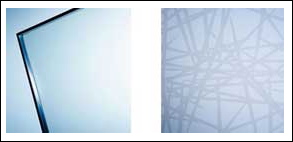
Spider Webs Inspire 'Bird Safe' Windows: A glass inspired by spider's webs is being used to keep birds from smacking into windows. Birds can't see glass well, and so many of them die when they hit picture windows. Humans can't see glass well either, which might explain why some people try to walk through glass doors. But most people know that the refection of the sky and landscape in a window isn't real -- unfortunately, birds don't. According to the Fatal Light Awareness Program, a building with glass walls or windows can kill up to 10 birds per day, and estimates of worldwide deaths from such collisions reach hundreds of millions of birds each year.
The glass was tested in a flight tunnel in the United States. Birds were allowed to fly to one end of the tunnel which was covered with two types of glass, one with the UV-reflective coating. The birds avoided hitting the coated glass up to 68 percent of the time. (No birds were hurt in the testing because researchers used a net to prevent the birds from impacting the glass.) The glass is also being used by a Canadian wildlife center, a German zoo and a mountain railway building in Austria.

An example of how deceiving glass reflection can be to birds.
The Fatal Light Awareness Program (FLAP) is a non-profit organization governed by a Board of Directors, and sustained by the tremendous efforts of approximately 100 dedicated volunteers. Many species of birds migrate at night. Guided in part by the constellations, they are attracted to the bright lights left on overnight in urban areas, causing them to collide with buildings. During the day, windows confuse migratory birds. They cannot see the pane of glass. Instead, the birds focus on the reflection of trees or sky, or see through the glass to a potted plant inside the building. The result is often a fatal collision. FLAP is the first organization in the world to address the issue of birds in collisions with buildings. Since 1993, our volunteers have picked up over 50,000 injured or dead birds from 164 species in the Toronto region. 64 of these species are in serious population decline, and this includes several species deemed at risk under Federal legislation. 40% of the injured birds, rescued by FLAP, survived to be released back into the wild. Concerned groups in New York City, Chicago, Montreal, and Minneapolis-St. Paul have since created similar organizations. A network of protection for migratory birds is emerging from this collective effort.

Bird-Safe Glass Being Used At UK Lookout Tower: A special type of glass coating, developed by a German company and inspired by spider webs, is being used for the first time in the UK to help protect birds flocking to an island off the northeast coast of England. The glazing, which is known as Ornilux and is visible to birds but invisible to humans, was developed by researchers at Arnold Glas and is being used at a lookout tower at The Holy Island of Lindisfarne in order to keep the “hundreds of species” of birds that flock there at specific times of the year, BBC News reported on Friday. Previously, the substance, which can reportedly reduce bird collisions by as much as two-thirds, has been used by a Canadian wildlife center, a German zoo, an Austrian railway building, and a U.S. school. However, Lindisfarne is the first UK facility to make use of the UV coating that was first introduced to Europe in 2006.

“A friend of the owner of the company saw an article about the Orb-weaver spider,” Arnold Glas export manager Natalie Kopp told the BBC. “Its web reflects UV light protecting it from being destroyed by birds as they can see it and do not fly through. The idea of developing a coating for glass… inspired by nature was born on the same evening.” According to the company’s official website, bird window strikes is one of the greatest threats to avian mortality (second only to habitat destruction), largely because of the “reflective and transparent characteristics of glass.” In order to prevent those collisions, the company’s bird-protection glass has a patterned, UV-reflective coating that makes it appear transparent to people, but observable to birds.

Ornilux was first tested in a flight tunnel at the American Bird Conservancy, and according to the BBC, those tests involved birds flying towards an end of the facility covered with both glass and the special glazing. Nets were used and no birds were harmed in the experiment, the firm said, and the trials revealed that the Ornilux glass coating could prevent up to 68% of avian collisions. “The safety measure comes at a cost. The product is significantly more expensive than alternative measures such as placing semi-transparent UV-coated stickers across windows. But it has the advantage that it does not spoil the view for humans,” the BBC said, adding that the visibility factor played an important part in the decision to use Ornilux at the Lindisfarne lookout tower, a landmark originally built in the 1940s.

“We have a massive increase in birds at certain times of the year and the building is going to be there permanently,” Lindisfarne development officer David Suggett told the British news organization. “From the outside to the human eye the glass looks absolutely normal – it just looks like it’s see-through. But if you are a member of the public and you go inside and you go very close to the glass at a certain angle you can see very fine veins running through it and this is what the birds pick up on when they are flying round the tower.”

Testing Special Glass: Even when there's no reflection, glass confuses birds. "The other thing that happens," Sheppard says, "is that birds will try to fly through glass to something that's on the other side. This can be a planted atrium. It can be a potted plant." So Sheppard has set up an experiment at Powdermill. She's putting birds in a tunnel that sits in a grassy part of the reserve. It looks like a house trailer. Two panes of glass enclose one end — there's regular plate glass on one side; next to it is a pane of specially coated glass. Sheppard is testing various coatings on and in glass that are visible to birds, but not to people. A fine mesh net just in front of the glass keeps the birds from actually hitting it.

Luke DeGroote comes to the tunnel with the morning's catch: catbirds. They screech, though not like any other bird you've heard. "They get their name from that catlike sound that they make," says DeGroote. The birds are in cloth bags; DeGroote wears several tied on a string around his neck. Sheppard's assistant, Cara Menzel, takes one and gives it a number — this one is 49931. Then she gently puts it in the tunnel. A camera mounted in the trailer wall focuses inside and films which glass window it flies toward. "Direct left," she says. The bird flew directly to the left, toward the regular glass. The glass on the right has a pattern of lines painted on the inside, and the idea is to see if the bird will avoid it. The pattern is made of a material that reflects ultraviolet light. Birds see well in the ultraviolet range. Presumably, they see the pattern as something solid; the human eye can barely make it out.

But Menzel notes that when the sun sets, it's a whole new problem — "especially during these big migrations," she explains, "where the birds are coming through in larger numbers, and a lot of them fly over at night." Biologists believe birds are attracted to the lights inside buildings at night. Sheppard has studied birds all her life. She says the real difficulty is trying to think like one — to figure out why they do what they do. There's been some research in Europe on bird-friendly glass, but not much here. "Not enough people know about it, and it's really important," she says. "Many people believe that birds have an intrinsic right not be killed. Birds are seed dispersers; they eat tons of bugs. So every bird that's killed on a building is an ecological service that we lose."

Several cities in the U.S. and Canada either have or are considering new building codes that require bird-friendly materials. And there are some quick fixes for windows — decals or sheets of patterned plastic that attach to glass. But ideally, biologists and architects want solutions that people can't see and that will be standard products in buildings — and that won't cost an arm and a leg.

More blogs on bird-strikes here.

Wednesday, 28 September 2011

San Francisco New Bird Saving Ordinance Means Cloudy Windows

At Swarthmore College in Pennsylvania, a science building has patterned plate glass that is both visually attractive and visible to birds, to deter them from crashing into it. Now, San Francisco is following suit.
San Francisco is for the birds — at least its new buildings will be. An ordinance approved Tuesday by the Board of Supervisors requires that new buildings in parts of the city use "bird-safe" standards that reduce the risk of winged creatures hitting panes of glass. Advocates say that hundreds of millions of birds die each year after flying into glass windows or walls in the USA, and that San Francisco's action will boost efforts to encourage bird-safe buildings nationally.

"It's a global problem," says Christine Sheppard, bird collisions campaign manager for the American Bird Conservancy. "Everywhere you find glass, you will find dead birds. One of the reasons that people don't recognize it is a problem is that it is so widely distributed. There are some buildings that kill thousands of birds a year."

Transparent and reflective glass both pose a threat to migratory and local birds, Sheppard says. Birds don't see glass or recognize it as a barrier and think they are flying to vegetation they see through the window or in a reflection, she says. Marking windows with dots or other designs, or shielding the glass with screens or other architectural devices, can reduce fatal accidents, Sheppard says.

Margie O'Driscoll, executive director of the American Institute of Architects' San Francisco chapter, says her group supports the idea of protecting birds but believes the ordinance "doesn't seem like the best way to go about it." She says the action was taken without a study of bird deaths due to buildings in San Francisco. "I walk to work every day down Market Street," O'Driscoll says. "I've never seen a dead bird."

She says glass with partially opaque material inside can double the cost and create "murky" viewing, and may reduce energy efficiency. "For people who want a great view and pay a premium for a great view, there's going to be some serious frustration," O'Driscoll says. AnMarie Rodgers, manager of legislative affairs in the San Francisco Planning Department, and Erika Lovejoy, senior environmental planner in the department, reviewed 30 years of research and local experience with birds in drafting the proposal.

Rodgers says the California Academy of Sciences building inside Golden Gate Park, built with expansive glass panes, has been retrofitted with screens during parts of the year to deter bird accidents. Rodgers says they did not believe the ordinance would increase building costs. It will apply to new construction in certain areas considered near bird habitats, including within 300 feet of a 2-acre or larger green space or open water.

Also see here.

Monday, 28 March 2011

Birds In A Flap Over Clean Glass


What Can You Do To Prevent Fatal Bird Strikes? Be aware that birds collide with windows all year long. Spring and fall migration seasons, however, see dramatic increases in fatalities. Extra precautions taken during the migration periods may be very beneficial and well worth the effort. Basically, anything that cuts down on the reflective, see-through qualities of your windows may make your home or business more friendly to migrating birds. Scientists call attention grabbing designs on windows, “visual noise,” that cry out, “Watch out!”

Retro-fitting At Home and at the Office: Assess your situation. Many homeowners find that bird crashes occur at certain windows. Often windows that are installed on opposite sides of the house present to birds a clear passageway.  Focusing on the windows where birds run into problems may make the task of preventing strikes less daunting. Place bird feeders as close to windows as possible or far away from windows. A bird only needs a distance of 3 feet to gather enough speed to fatally crash into a window. Placing a feeder very close to a window limits the bird’s ability to attain crashing speed.

Decals can be effective if, and only if, they are placed very close together. Some, specifically marketed for this purpose, are quite attractive and give the appearance of etched glass. But they must uniformly cover the window surface at 2 inch intervals to work well. Posting post-it notes in bright colors, again placed closely together, on windows during the spring and fall migration seasons has also been found to be effective. The advantage here is that this solution is inexpensive and once the migrating season ends, they can be easily removed. Duct tape may be used to create patterns as well, but it may be more difficult to remove.

Dr. Christine Sheppard from the American Bird Conservancy has found another inexpensive technique for preparing home windows for migration. Non-toxic tempera paint, used to create patterns on the exterior of windows, is according to her “surprisingly durable..it doesn’t wash off with rain, but comes off easily with a damp cloth.” She encourages parents to get their children to help paint designs on windows within their reach. If you’re not up to free form painting, stencils are available at art stores.

Birds screens that can be purchased in various sizes and shapes or customized and attached to exterior windows and sliding doors are also effective as they are a more forgiving surface at impact than glass. Frank Haas in Pennsylvania owns the Bird Screen Company and sells to homeowners online or on the phone. The screen may be attached using screw hooks or with suction cups. The screens are no more than 36 inches wide and therefore do not have a commercial application. (www.birdscreen.com)

Some buildings have retrofitted using netting to cushion bird collisions. The Ornithology Department at Cornell University has netting on their glass windows. The same product that is manufactured to keep birds out of fruit crops can be used to protect them.

BirdMaster, a firm that provides elegant and unobtrusive netting for protecting historic buildings from infestations of bird pests, pigeons, starlings and sparrows are the experts that can also design netting systems to protect against bird strikes.

In the New York Metropolitan area, the New York City Audubon Society will provide consultation with office building managers to customize a specific approach to address the problem. Turn off unnecessary lights. Ask your municipality to adopt ordinances that would require shielded, downward pointing light for new construction. Share this information with others. Most people are shocked that the problem is such a big one and has garnered so little publicity.

How should I care for a stunned bird after it flies into a window? According to the Bird Conservation Network, more than 100 million North American birds die each year from window collisions. Even outside of spring mating season when birds are more likely to be confused/distracted, bird collisions are extremely common simply because birds do not recognize glass as a barrier. Ornithologist Daniel Klem of Muhlenberg College tells National Public Radio: "It's a very common phenomenon. Birds are deceived. They just don't see glass as a barrier and this is a problem for them."

So here's what you should do in the event that you hear that distinctive thump against a window and go outside to find a stunned bird. Observe the bird for a few minutes. Often, stunned birds with no physical injuries like broken wings can recover quickly from a window collision without any human assistance other than a watchful eye to make sure no potential predators (e.g. your cats) swoop in for a quick lunch.

If the bird remains inactive after five minutes or so, pick it up carefully - carefully being the operative word here - keeping it upright so it can breathe and not restraining it. You can don a pair of gloves if you see fit. Place the bird in a box with a lid (shoeboxes work fine) lined with paper towels or a soft cloth. Poke a few holes in the box large enough to allow for some ventilation. I'd keep a couple of dedicated traumatized bird "rehab boxes" at the ready.

Next, place the box in a warm, dark and secure (read: cat-free) area of your home where the bird will be able to "reboot" in peace and quiet. According to Wild Bird Watching, when a stunned bird is removed from all stimuli there's a greater chance it will heal from a potentially fatal concussion. Do not try to feed the bird, give it water or play the role of doting bird nurse. Just let it be.

After an hour or two, take the box outside, staying as far away as possible from your home or other structures. Open the box/bag and hopefully the bird will fly off, craning its neck to give you an appreciative, midair wink as it rejoins its buddies. You may need to pick the bird up once again to help it achieve takeoff.

This is the best-case scenario. If the bird is still in a vegetative state or seems worse off than when you first found it, close the box back up, take it back inside to a safe place and contact your local licensed bird or wildlife rehabilitation center for further instruction. Something to note: It's illegal to keep a wild bird in your care. A little post-trauma assistance is fine but if after a few hours in your care the bird is still struggling to snap out of it, it's time to seek outside help.

If the area around your home proves to be a bird magnet again this spring, I'd also take some preventive measures. Sure, it's great to know how to take care of a stunned bird, but you should probably collision-proof your home. The National Audubon Society offers an authoritative list of things you can do including strategic bird feeder placement, installing window decals and drawing your curtains or blinds.

More info here:
Bird-Friendly Building Certification
Aqua Tower Gets Proggy from PETA for Being Bird Friendly
Mirrored Tree House Built In Sweden (With Bird Film)


Bird-Friendly Glass Designed With Help From Spiders: There's such a thing as bird friendly glass, believe it or not. A German company called Arnold Glas makes Ornilux, and recently collected an international design award for its spider-web inspired product. Estimates are that more than 100 million birds die every year in the United States from collisions with windows. The number is about 250,000 a day in Europe, according to Arnold Glas. A special ultraviolet reflective coating makes the Ornilux glass visible to birds, but doesn't obstruct the view for us humans.

"The highly effective coating which, when looked at against a backlight, seems like a randomly unfolding layer of the game Mikado pick-up sticks, is barely visible to humans and integrates seamlessly into architecture ..."
The latest version of the glass, called Ornilux Mikado, received the "red dot" award this year from the Design Zentrum Nordrhein Westfalen in Essen, Germany. Judges noted that the glass uses the same techniques that spiders use to keep birds from flying through and destroying their webs. The glass was developed in conjuction with the Max Planck Institute for Ornithology, which tested Ornilux on Central European garden birds and found they recognize it better than ordinary glass. The coating reduces bird strikes by an estimated 75 percent, is more effective than stickers and also helps insulate a building, Arnold Glas says. The glass is making its way to the states. The Detroit Audubon Society is one of the latest organizations to highlight the product.

The first installation of Ornilux was in the spring of 2006, during the modernization of the 100-year-old enclosed swimming pool in the German city of Plauen.

Wednesday, 9 February 2011

High Time & Bird Grime For Window Cleaners


Window cleaner having a high old time (New Zealand): Abseiling off a giant glass building may not be everyone's idea of a good time, but it is all in a day's work for Dunedin window cleaner Nick Beadle. Mr Beadle, a high-rise window cleaner, has spent many hours over the past six weeks dangling off the side of his biggest job yet - the 13-storey Otago House building on the corner of Moray Pl and Princes St in Dunedin. The qualified abseiling window cleaner said this was the first time he had cleaned the black glass building as, before the recent addition of three extra storeys, a crane was used to clean its windows. It is a new job for his company, See Through Windows, and a big one.
He started the job at the start of January, but the inclement weather and high winds that month made it difficult to carry out the work. Mr Beadle spoke to the Otago Daily Times via his hands-free telephone from the eighth floor of the building. For the job, he wears a full body harness and sits in a bosun's chair (a plank) suspended from a guide rope, with his bucket full of water with dishwashing liquid in it - "It doesn't matter what's in your bucket, it's the squeegee that does all work." - suspended beside him on the safety rope.
It took him about one and a-half hours to clean a block, four windows across, from the top storey to the ground, he said. "I'm quite the attraction at the moment. There's been quite a few people looking up, and quite a few taking photos." He took up abseiling after he started working for the window-cleaning company about 11 years ago. Seven years ago, he took over the company, which cleans the windows of many of Dunedin's taller buildings, including Forsyth Barr House and Frances Hodgkins Retirement Village.


Infestation of starlings makes Nantwich residents’ lives a misery: Thousands of starlings are ruffling feathers by showering Nantwich with muck. Droppings from the huge flock are splattering everything in sight – including buildings, pavements, cars and people. The problem has come home to roost with people now avoiding ‘bomb alley’ around dusk.
Townsfolk want an end to the starling plague and the cost and effort of cleaning up the mess. Ros Reid, who lives in The Blankney off Water Lode, said: “We can’t walk around to the shops when they gather overhead – the Morrisons area is particularly bad. You need an umbrella. Everything gets showered in muck. “My conservatory’s plastered and so’s my car. It’s a health hazard and it stinks. It’s beyond a joke.” A Spring Gardens resident added: “It’s like running a gauntlet. You daren’t look up. It’s a real nuisance.”
But a Cheshire East Council spokesman said their hands were tied when controlling bird numbers. He said: “While the starling swarms look impressive, we appreciate the mess they leave behind is unsightly and is a disruption to residents. “But the starlings are protected and it’s illegal to intentionally kill injure or disturb them. We’ve no plans to use any methods to control numbers.” Businesses are suffering from the starling plague too.
Window cleaner Roger Akam says they’re making his life a misery. He said: “It’s twice as hard to get the job done. It’s not creating more work, it’s just making the job harder.”
The problem is even putting people off moving to the area. An estate agent said she’d lost a client because of the starlings. She said: “A guy was buying a house near Brine Leas school area but he’s been put off by the birds. It can’t be a one-off. Others must be put off too.”

Saturday, 8 January 2011

Skylight Disaster Maims Three + Other Window Cleaning News


A window washer works with his shadow recently on the new Simmons law firm located in the former Jefferson Smurfit headquarters building in Alton. The building was gutted and completely rehabbed including the replacement of its hundreds of windows, making plenty of work for the window washer now that all of the panes are installed.

Firm fined after three men fall through skylights in same industrial unit in less than a month: A landlord was fined £5,000 after three workers fell through skylights at the same industrial unit on separate occasions – leaving one of them paralysed. The first man was a caretaker who fell through a window while cleaning it, breaking several ribs and suffering bruising. A second worker, at the Bizspace-owned industrial unit in Warrington, was sent up to the skylight to take photos of the scene – but fell through a different window. Luckily he landed feet first and was uninjured. Then a 62-year-old man who was sent to repair the skylights also tumbled out. He fell four metres and is now paralysed from the waist down.
Both Bizspace and Massey Roofing and Building Contractors, who employed the third man, pleaded guilty to putting workers’ lives at risk after the Health and Safety Executive (HSE) prosecuted them. London-based Bizspace, which rents out business premises, was fined £5,000 and ordered to pay £9,000 costs at a court hearing. Anthony Massey, 67, from Bury and trading as Massey Roofing and Building Contractors, was given a conditional discharge because he has been declared bankrupt. It means he won’t be fined as long as he doesn’t re-offend within a year.
The first man fell on March 20, 2007, at Bizspace’s unit on Craven Court industrial estate in Warrington. The last fall was on April 10, 2007. A spokesman for Bizspace said: “The conviction of Bizspace only related to the falls of their two employees, not that of the specialist roofing contractor, which was clearly the most serious. “Judge Hales accepted neither employee was instructed by the company to go onto the roof and indeed, that there was no necessity for them to be there. This was reflected in the low level of fine.”

Local cleaning company handles unexpected situations: Socorro Janitorial Services handles about 110 commercial and residential jobs per week, and the company's vans and trucks are seen all over town and the surrounding area. Normally, the service's six employees clean homes, offices and restaurants, doing everything from window washing to floor care, with a little seasonal chimney sweeping and the occasional job clearing up construction sites.
Occasionally, however, they're called on to discretely perform a more sensitive service. Socorro police estimate they handle about 20 to 30 unattended deaths per year. Sometimes the deaths are quiet, and the deceased are discovered and removed right away. Sometimes, however, they're not. In some situations, expert handling of the aftermath of a messy death is called for, and that's where Socorro Janitorial comes in. "It's a sensitive subject," said Tony Tellez, the company's owner. "Depending on how severe it is, we're not licensed to do some kinds of things." For example, he said, some situations require more training and specialized handling. "We don't handle people or parts," he said. Typically, his company doesn't deal with the aftermath of violent crime, either. "The only ones we've dealt with are suicide or natural cause of death," Tellez said. "No homicides." Read more here..

The U.S. Secret Service first began investigating Todd Denson in 2006. The man later confessed he misappropriated nearly $80,000 from several residents of Cumberland County, where Denson used to live and own a window-washing business based in Westbrook. In order to attract investors, Denson fabricated stories about how he had made millions designing window-washing equipment or how he stood to inherit millions from his long-lost father. In most instances, Denson was able to document his alleged wealth. In one case, he played a phone message to a potential investor from an overseas bank that confirmed his wealth, witness testimony revealed. In another, Denson told Secret Service agents that he traveled overseas and physically saw the money. Three victims testified at his trial last year that Denson persuaded them to give him money with the promise that he would pay them back more than what they gave.
U.S. District Court Judge George Singal had hoped never to see Todd Denson again when the federal jurist in June 2007 sentenced the Stockton Springs man to 18 months in prison for mail and wire fraud. Denson, 50, was back before Singal on Friday to be sentenced for again soliciting money to send overseas in an international scam. A jury convicted him in September of 13 counts of wire fraud — the second time in four years that he was implicated in such a scheme. Denson spent 14 months in federal prison in 2007 and 2008 after he pleaded guilty to seven counts of mail and wire fraud in U.S. District Court in Portland. Singal on Friday sentenced Denson to 45 months — 30 months for the new wire fraud charges and 15 months for violating his supervised release on the previous case, which adds up to nearly four years in federal prison.
“I’m not sure the defendant today understands the harm he has done to other individuals,” the judge said Friday. “Mr. Denson, you are a person totally committed to your benefit.” The judge again sentenced Denson to serve three years of supervised release with strict conditions after he completes his prison term. One condition would prevent Denson from sending money out of the country. In addition, the judge ordered Denson to pay more than $26,000 in restitution on the current case and the $54,000 still owed from the earlier case. So far, Singal said, Denson has paid none of the restitution owed to the four victims he admitted scamming in 2006. Original blog story here.

Passing of David Trager: One of his daughters told of reading the judge's own eulogy of his father, who arrived in America as an immigrant from Europe knowing no English and hardly any other people. He eventually found work as a window washer. The immigrant window-washer's son made his way to Columbia and then Harvard Law School and then the federal bench, finding time along the way to make a lot of friends and admirers, if the huge and racially diverse crowd on a snowy morning at the funeral was any indication. I didn't, alas, know Judge Trager very well (his wife wrote for me at the New York Sun a bit), and the context in which I did know him was not his courtroom. But I always appreciated the encouragement he provided. For me, the remembrances of him this morning illuminated both the social mobility and the commitment to modest, impartial rule of law that are such important parts of both why people like the judge's father want to come to America in the first place, and why their descendants are proud to make it their home.

Mam's agony as son's killer jailed for death crash: One moment of madness cost him his life and left his family with a lifetime of heartache. Tragic teenager Conor Barton had never been interested in motorbikes before a pal persuaded him to become a pillion passenger on a 100mph death-ride. His heartbroken mam (pictured)  believes in that split-second decision, her treasured boy caved in to peer pressure from his older friend and climbed on the stolen machine without a helmet. It was a decision that would end up with him losing his young life as he was catapulted to his death. Today as joyrider Ryan Luscombe begins a four-year, eight-month jail sentence for causing the smash, Conor’s mam Heather Jukes has spoken of the agony of losing her only son. And the devastated 39-year-old has urged other youngsters to think before making the same fatal decision Conor did.
And one evening in August 2009, Luscombe called at the house where the teen lived with his grandmother, Joyce, asking him to come out. The window cleaner later persuaded his pal to join him on a joyride on a Suzuki 1100 he had helped steal from a customer. With Conor riding pillion without a helmet, Luscombe sped down a stretch of the A1 near the Team Valley, Gateshead, that was partially closed as repair work was carried out. Riding at “breakneck speed” southbound towards the roadworks where cones were filing traffic into a single lane, he sped past one lorry at an estimated 100mph and weaved from side to side trying to pass another, Newcastle Crown Court heard. And when he ignored the clear “Road Closed” signs, planning to use the slip road to jump slow-moving traffic, disaster struck. Conor was catapulted to his death when the bike careered into a parked dumper truck.

Maid American Style Opens New Office in Manassas & Offers Cleaning Packages Designed for Pregnant Woman & New Mothers. The excitement of a new baby is awesome and a blessing to all, however trying to maintain the house, kids, and work can be quite exhausting! Not to mention getting use to the newborns schedule during the first 3 months of life. It is for this reason that Maid American Style has established residential cleaning packages to assist pregnant women and new mothers with the daunting tasks of house cleaning chores.
Maid American Style is a Virginia based residential house cleaning and commercial office cleaning company that has expanded their coverage area to include residents and business customers in Washington, D.C., Adams Morgan, DuPont Circle, Georgetown, Annandale, Reston, Fairfax, Alexandria, Bristow, Arlington, Fort Belvoir, McLean, Vienna, Alexandria, Burke, Manassas, Woodbridge and the entire Washington, D.C. metro area. The company just announced the opening of their corporate office in Manassas, Virginia on January 10, 2010. The company offers green cleaning services and uses certified green cleaning products which are safe for everyone including infants and pets.

At least twice more over the festive period, birds clattered into windows. Only glancing blows, such that the birds survived and flew on, but it raised the question of whether this happens more in winter than in other seasons. And is it more likely with larger birds? The two other fatal instances that I can recall, one from last winter, the other from the 1980s, involved a thrush and a sparrowhawk.
“It’s certainly a problem we have experienced at Waterston House,” said Kathryn Cox of the Scottish Ornithologists’ Club. (Waterston House in Aberlady is the SOC head office.) “The green garden is reflected in the large windows, making the glass effectively invisible to birds. It seems to be less of a problem at the back of the building where there is a pond and less greenery. I have also experienced it at home where I have French doors and a window on opposite walls, and the birds seem to think they can fly through the building rather than over it.”
As to how best prevent such incidents, Cox offered several ideas. “We have reduced the problem greatly at Waterston House by moving our feeders away from the windows, not cleaning the windows so often in summer (so they’re not so reflective), and we have also put up lots of bird silhouette stickers to try and make them aware that there is a solid surface there. Despite this, we still had a swallow stun itself in the summer, but it recovered and flew away.

FALSE ALARM: An Avon officer was flagged down by a juvenile on May 13, who said that there was a man wearing a mask inside the First Federal Savings of Lorain Bank. Police waited outside for the suspect to emerge. However, when he came out, it was discovered the man was cleaning the bank and was wearing a ski mask because of his asthma.

Wednesday, 22 September 2010

Escaped Killer Found Cleaning Windows + News

Escaped killer found cleaning windows: A sadistic murderer who went on the run from jail has been found in Blackpool working as a window cleaner. Neighbours in Marton today spoke of their shock after discovering killer Matthew Taylor living on their street. The 25-year-old tortured and stabbed a man to death during a sickening robbery 10 years ago. He had been serving time at Kirkham Prison, but went on the run in March after failing to return to the open jail following home leave. Taylor was finally caught on Thursday when police found him at his partner's home in Cleves Court, Marton (pictured). He has now been sent back to prison to complete his 10 year sentence.
Taylor was just 16 when he, together with accomplice 17-year-old Christopher Pownall, was found guilty of the murder and robbery of Simon Bailey. The 39-year-old victim was beaten and had bleach poured over him before he was stabbed to death in his Stockport home. Residents on Cleves Court today said they were horrified to learn Taylor was living in a flat on their street. One neighbour, who saw last week's arrest, said: "There were loads of police everywhere wearing riot gear. "It's worrying – what if he comes back? It's pretty shocking to think he was living here and it was six months before he was found."
The killer, who formerly lived in Stockport, pleaded guilty to remaining at large from prison at Blackpool Magistrates Court. The court added 125 days to his sentence. Taylor will now serve at least another year in prison. He told the court he had packed his bag to surrender himself at a police station the day of his arrest. Angela Shelmerdine, defending, said her client failed to return to the prison because he was scared as his parole was coming up. She said: "After he failed to return to prison he committed no offences. "He started work, getting cash-in-hand jobs from friends, involving gardening and mechanical work. He also got a window cleaning round.


That's Smart, Kid-Friendly Glass: With these glass panels, doodling on the walls isn't discouraged - it's required. Looking for a way to let your kids make their mark on your walls without, well, destroying your home in the process? Check out this brilliant new product from Skyline Design, a company dedicated to providing eco-friendly decorative glass for the home. The Kids Glass collection combines color and imagination in the form of clear panels of safety glass (the same glass used in car windows, designed to withstand shattering) with patterns printed on the back. Originally designed to entertain kids in hospitals and day cares, Kids Glass can be drawn on with regular marker, which then cleans up easily with window cleaner or a chalkboard eraser.

Doggie drool remover: The current pet travel safety drive being spearheaded by Toyota to ensure that all pets are properly restrained in moving vehicles means that dogs are more likely to fog up car windows if they aren’t allowed to ride with their heads outside. Yecch is a special window cleaner to remove doggie drool from any glass surfaces in the car. Made by Bissell, the special formulation is applied with a soft brush to loosen the sticky goo and has a squeegee to remove the slobber and restore visibility. Available in specialty pet stores countrywide.
Bringing your pet along for a trip involves more then just getting them into the car and hitting the open road. You need to consider your pet's safety on the long ride. Does your pet get carsick? Do you have a restraint in place for its safety? Is your pet too skittish for car travel? We've put together our top five safety tips designed to help make traveling with a pet in the car a more enjoyable experience for everyone. Keep reading to find out how to get to your destination without any pet-related incidents.


Windoro stays vertical using neodymium magnets: Called Windoro, the robot consists of two separate modules that clean the window by spraying detergent and scrubbing away with a series of spinning pads. Unlike the Stickybot we looked at recently that mimicked gecko biology to scale surfaces including glass, Windoro relies on neodymium magnets that pull the two modules on either side of the window together with enough force to allow it to stay vertical. The researchers chose this method instead of vacuum power because they found it wasn’t as safe or reliable and would require the vacuum to be on at all times just to keep the robot in place.
With the magnets, Windoro will stay on a window from 10 - 25mm (0.39 - 0.98-in) thick, even when powered down. Once in place, Windoro uses distance measuring sensors, attitude determination and collision detection to stay on track as it performs its window washing magic. The robot reportedly took around 300 million KRW (approx. US$258,500) to develop and the PIRO team plans to release it commercially next year targeted for use in high-rise buildings. Now that the floor and windows are covered we’re awaiting a vacuuming robot that clings to the ceiling to banish those hard to reach cobwebs. See previous blog here.

It was decided two weeks ago to send the Large Yacht Code 2 to consultation for three months. It includes new regulations regarding submarines, helicopters, radio and window cleaning, Towner said. Apparently, the practice of hanging off sailboat tracks meant for masts and rigging can be unsafe, so the MCA is writing some regulations about it. The Large Yacht Passenger Code, 1336 Code, is being written by the Cayman Islands and he said he thought it might be announced at METS in Amsterdam in November. The Maritime Labor Convention is being discussed this week in Geneva and it is still unclear how it will impact the yachting industry.


Installation of protective bird netting will soon be completed at Scarborough’s Grand Hotel thanks to abseiling workers. The netting will prevent birds, specifically seagulls, from building nests on the 143-year-old hotel. Hotel manager David Ayllo said: “The programme began in May but then some kittiwakes built a nest. They are a protected species due to their declining numbers, so the installation had to wait to be completed.” It is necessary to prevent the gulls, which are regarded a nuisance in some parts of town, from disturbing hotel guests with their mating calls. Their droppings are also responsible for a significant proportion of the hotel’s cleaning expenses. Mr Ayllot said: “The seagulls can play havoc for the hotel and have disturbed guests. This should make all the difference. “It has been a huge success and it will really make a massive difference to the guest experience.” Planning permission was required to install the protective netting and it is expected to be effective for around five years.

Court hears Norfolk Four appeal in Richmond: Derek Tice's applications when they spotted his criminal record. After searching for six months, he landed a job as a window washer, his first employment since leaving prison. As a convicted felon and registered sex offender, Tice has severe limits on his career and his life, said his father, Larry Tice. On Tuesday, lawyers argued whether Derek Tice should remain under close legal supervision or have convictions for rape and murder erased from his record. A three-judge panel at the U.S. Court of Appeals for the 4th Circuit in Richmond questioned lawyers about the case and the legal strategy used during Tice's original two trials. Tice was part of a group of sailors, known as the Norfolk Four, convicted in the 1997 rape and murder of Michelle Moore-Bosko. William Bosko, an enlisted sailor, returned from a deployment and found his wife dead in their Ocean View apartment.

“Taste Napa Valley,” a wine tasting scheduled from 6 p.m. to 8 p.m. Oct. 14 at the National Cowboy & Western Heritage Museum, 1700 NE 63rd St., Oklahoma City. The tasting will be a come-and-go event benefiting the museum. A silent auction also will take place. Participating restaurants will be at the Petroleum Club. Silent auction donors include Crystal Clear Window Cleaning.

Because here's the reality: doing something new is much harder than saying it. A new job that's in your field is itself a massive change. You might think I'm being a bit pessimistic, and that I just need a little belief in myself to get something off the ground. But really, that's not the problem--I believe in myself, but I know better that it really is that simple. People don't seem to realize that whatever job they suggest, IT'S ALREADY TAKEN. And there are 50 people on a waiting list when the position of window washer or lawn mower opens up. Those who haven't been poor for a while would do well to remember that it takes more than a month to get back on your feet after a huge economic setback, and it will take more than washing windows to do it. Most people in my position are not averse to any sort of work they can do to make ends meet, but in this arena, there are one million gladiators too many.

Monday, 23 August 2010

Window Cleaning News

Who's living there? Owner-occupied houses decline in Clark County: Before she bought a new home in 2004, Debra Michaud couldn't understand why a sales agent kept assuring her "only 20 percent" of neighboring houses would be sold to investors with no plans to live there. After all, she had not asked about out-of-town landlords or even considered what they might mean for her new neighborhood. But Michaud soon realized that many homes were sold to non-resident owners after all and quickly leased to tenants who, she said, didn't care for their homes, congregated in the street day and night, attracted criminals, and intimidated other residents. Crime has become such a concern that no-parking red zones line every inch of curb in her subdivision, speed bumps were installed and "No Loitering, Police Enforced" signs are posted in all public areas.
"We had the police here all the time. There was gang activity and a lot of break-ins. It was a scary place to live. This street was so bad that neighbors wouldn't come here to trick or treat," Michaud said. Her neighborhood lies near Commerce Street and Centennial Parkway in the northern outskirts of North Las Vegas. Michaud, who owns a window-cleaning business with her husband, purchased the home at a time when real estate values were skyrocketing and investors thought Southern Nevada real estate looked more prosperous than other investments. Now Michaud, her neighbors and hundreds of others who bought in those days live in neighborhoods where 40 percent or more of the homes do not belong to the occupants.
Public officials and others are quick to point to Las Vegas' foreclosure and unemployment rates, the worst or near worst in the nation, to explain the decline in home ownership. With Southern Nevada's unemployment the highest in the nation, and with the newest crop of outside investors - some from as far away as Guam and Israel - paying cash for 40 percent to 50 percent of the foreclosed homes for sale, Debra Michaud is worried what the future holds for her neighborhood. If an original investor who paid more than $200,000 for a home chose to lease to undesirable tenants a couple of years ago, she contemplates aloud, who will the new investor, who paid $100,000 or less for the same house, allow to occupy it? "I am afraid it will happen again," Michaud said. "They don't care about the neighborhood because they don't live in their home. All they care about is getting their money."

An 85-year-old widow claims she is forced to ‘live in a pig sty’ despite having paid her flat service charges in full for three years. Dina Sale bought her ground-floor flat at Ainsworth Court, Belgrave Heights, Darwen, three years ago after the death of her husband, Cliff. She pays a £57.55 monthly to Manchester-based property management firm Stevens Scanlan as a service charge for maintainence and insurance. Mrs Sale, who has mobility problems, said: “At first everything was lovely. Now I can’t open the blinds, they are so dirty. “The windows have not been cleaned since last August.
A spokesman for Stevens Scanlan, said the problem had occured because half of the tenants of Ainsworth Court had not paid their service charges. He said: “All owners pay into a fund for services and they are jointly liable. "We are administrators who just collect the money that is paid. "Legally, we can’t underwrite the payments to people like the gardener or the window cleaner on behalf of the other people who fail to pay. “The money that has been paid by tenants is used for essentials such as buildings insurance, third-party liability and electricity for the communal areas. “Health and safety must come first before cosmetic things like gardening, but it’s not correct to say that they have been suspended – they are just less frequent.

A former Carlisle window cleaner who falsely claimed nearly £45,000 in benefits has been ordered to cash in his investments to pay back as much of the money as he can. Stephen Nicholson, 58, of Linden Terrace, Harraby, was handed a 36-week suspended jail sentence in June after admitting claiming benefits even though he had up to £40,000 in the bank. A Proceeds of Crime Act hearing at the city’s Crown Court yesterday heard that he had already repaid nearly £21,500. He admitted that he had benefited by another £22,000. But, because he had only £10,187 left in his bank accounts, that was as much as the court could order him to pay. He will go to prison for eight months if he does not pay within 28 days.

Eric Silver, owner of the local Fish Window Cleaning® franchise, received the Rising Star Excellence Award for the midwest region at the company’s annual convention held in St. Louis in July. The award recognizes his franchise’s overall operational excellence, sales revenue, and account development during 2009. Silver’s franchise provides commercial and residential window cleaning services to customers in Denton, Corinth, Lake Dallas, Hickory Creek, Argyle, Westlake, Trophy Club, Roanoke, Little Elm, Oak Point, Aubrey, Gainesville, Decatur, Krum, Justin, Ponder, Crossroads, Sanger, Valley View, and Prosper, Texas. St. Louis-based Fish Window Cleaning has over 220 locations in the United States and is the largest window cleaning company in the country. The organization ranked 182nd on Entrepreneur Magazine’s 2010 Franchise 500.

Whether you're considering renovations in order to sell your home or simply want to increase the property's overall value, small improvements can lead to big payoffs. One of the most cost-effective ways to improve the appearance of a home's interior is to clean the house thoroughly and reduce clutter, said Pat Petrosillo, a real estate broker in Wappingers Falls. Petrosillo also suggests shampooing carpets and putting some elbow grease into window cleaning. "This may sound nuts, but if windows are clean they sparkle more," she said. She said, "Houses are selling, but not for what people are expecting." "It's priceless what some simple cleaning and de-cluttering can do for a home," she said.

How to Get Fingerprints Off of Anything: The almighty baby wipe takes care of grubby fingerprints on mirrors and windows. It seems to be able to cut through grime easily, and without leaving unsightly streaks. If you've already tried to clean your window or mirror and you're dealing with streaks, get your hands on a microfiber cloth, like the ones that come with a new pair of glasses (but you'll find bigger window cloths at the grocery or hardware store). Microfiber cloth is almost perfectly suited for cleaning glass surfaces, and often works great completely dry.

Now that you're impressed with all my ant knowledge, which has been of no help whatsoever, here's how to get rid of them in your house: window cleaner. Yep, Windex or some other variety of window cleaner will wipe away the ants. More importantly, it will remove the ant scent trail, which will leave all the other ants without a clue as to where to go to bother you!

Frank McCowan has a song in his heart - a song about Oakland. It's a beautiful ballad he has composed and would like adopted as Oakland's official song. Wanting to create a lasting tribute to his favorite city, McCowan wrote "Oakland, California" back in 1983.He has diabetes, arthritis, and walks with a cane. He no longer drives, but he doesn't need eyeglasses. He still travels - Egypt a few years ago - and he mows the lawn at his East Oakland home, literally across the street from San Leandro. "I'm making it," he said with a smile. McCowan once played the bass and sang for such local bandleaders as Chuck Phillips, Junius Courtney, Olen Greenwell and Clarence "Candyman" McGuirt. "I liked singing ballads," he said. "That was back with the big bands." Those were side jobs. McCowan was a laborer, mainly a window washer. After retiring, he went back to his native Oklahoma for two years, but couldn't stay away from Oakland and thus returned to the scene of his fondest musical memories of 50 years ago, when Seventh Street was hopping with blues and booze.

If you have some things that go bump in the night, there's a new company that may be able to help you figure out just what it is. Jim Berkowitz and Eileen Higgins have recently opened Queensbury Paranormal Investigation Team and will investigate any potential paranormal activity free of charge. Berkowitz works for the post office, and Higgins is a nurse, and the business is the pursuit of a hobby. Both have had personal experiences with the paranormal, and now have the equipment to discover and record this activity. A couple of years ago, the pair ran a janitorial company and were cleaning an old building on Warren Street at night. "I always felt we weren't alone in that building," Berkowitz said. "On our third night there, a woman in a black dress walked by the bathroom."

If the very idea of a spray-on film that can turn windows into solar collectors sounds too good to be true, think again. After all, Japan's University of Tokyo did come up with a Wi-Fi-blocking paint, while a number of companies including Konarka have developed solar cells that sit within the window.
Pushing the envelope on solar panel technology is Norwegian company EnSol, which has patented a prototype thin film solar cell technology designed to be sprayed onto any glass surface. In fact, plans are afoot for a thicker solution to coat exterior walls or be used in the form of "clip-together" solar roof tiles. If this technology works as planned, it could take away the need to plonk big solar panels on rooftops, particularly in industrial settings.
Unlike traditional silicon-based solar cells, EnSol's film uses metal nanoparticles embedded in a transparent composite matrix. Ensol's collaboration with the University of Leicester's Department of Physics and Astronomy could have the product seeing the commercial light of day by 2016. Pictured - Testing EnSol's spray-on film inside a deposition chamber.


Preparation for Malaysia's 53rd Independence Day: Workers are seen completing the glass tinted works of the Malaysian Flag 'Jalur Gemilang' onto window panels of a building in Kuala Lumpur in preparation for celebrating the upcoming Malaysia Independence Day. Kuala Lumpur, Malaysia.


Bird Friendly Glass Helps To Prevent Birds Flying Into Them: Someone has apparently crunched the numbers and estimated that more than 100 million birds are killed every year due to collisions with glass surfaces – not to mention the untold numbers of beverages spilt by surprised people as a bird slams into a nearby window. Birds see the tree or sky reflected in a window or the environment behind the glazing, but not the glass itself. German company Glaswerke Arnold (or Arnold Glass) has come up with a simple way to prevent these collisions by producing a glass that appears normal to humans but is visible to birds.
Working on the principle that birds possess the ability to see light in the ultraviolet spectrum, the company’s Ornilux Bird-Protection Glass borrows a trick from orb-web spiders that protect their laboriously woven webs from birds flying through them with a special UV-reflecting silk. Recognizing this, the company developed the glass with a patterned UV reflective coating that makes it visible to birds while maintaining transparency to the human eye.
The glass was first introduced in 2006 but the company has released an aesthetically improved version with a crisscross pattern. Developed in collaboration with the Max-Planck-Institute for Ornithology, this latest version is called Ornilux Mikado because, when looked at against a backlight, the coating looks like a randomly unfolding layer of the game Mikado pick-up sticks.
Testing at the Max-Planck-Institute for Ornithology at the Ornithological Station in Radolfzell, Germany resulted in a bird strike reduction of up to 75 percent in comparison to standard double glazing. Not sure if any animals were harmed in the testing procedure but if so, they obviously gave their noggins for a good cause. Glaswerke Arnold’s Ornilux Mikado Bird-Protection Glass picked up the red dot award for product design 2010. See previous blog here.

Float glass manufacturer, Sezal Glass today said it has formed a 50:50 joint venture company with UK based CGI International for marketing fire rated glass under the brand ''Pyroguard''. "We have formed a joint venture company with UK''s CGI International called Sezal Firebaan Glass for marketing fire rated glass under the brand Pyroguard," Chairman and Managing Director of Sezal Glass, Amrrut Gada said. Our UK partner offers fire rated glass which is heat resistant for between 60 to 120 minutes, and the time frame can be enhanced depending on the consumer demand, he said. The company expects the market for this type of glass to grow by 40 per cent in India amidst rising security concerns. "In future we expect huge demand for this type of glass to come from sectors like defence and railways, as the security concerns are rising," Gada said, adding there is also demand from commercial buildings, hospitals and shopping malls.

Family Scammed Out Of Rental Home: INDIANAPOLIS - A family who recently moved to Indianapolis lost a $450 rental deposit and is now searching for a place to live after being taken by a scam. The couple was duped by two men who claimed to be in charge of renting a duplex at 142 S. Emerson Ave., on the city's east side. Kristen Carr said she believes the men broke into the duplex to show them around. After being provided with a rental receipt and keys, Carr and her husband, Chad Yattaw, realized the keys did not work. "It's awful. It's horrible. I can't believe somebody would do this, and they knew we had kids and what the situation was and still took advantage," Carr said. The couple and their three children are now staying at a hotel. They were hoping to move into their new place over the weekend. "I mean, they took from my family. Obviously they're taking from what's closest to me," Yattaw said. "I'm a high-rise window washer. I risk my life every day to make the money that I make."

There's something about living with other people that calibrates your tidiness against each other and assigns one person the role of Clean Freak (aka The Nag) and someone else the role of Messy Pig (aka The Nagged). It's a widely held misconception that clean freaks are female. Wrong. I live with a Domestic God and I don't say that to brag. It's hell. My husband may not be able to bake, but he is a very tidy guy. Organised, too. I am neither tidy nor organised domestically and this causes many problems. For him. But for me, too. May I please speak up on behalf of messy people and state it's not fun to be told constantly how to be less messy? Pretty soon, you're lying on the couch in stained pyjamas defiantly flicking belly-button lint on the floor, while your partner whips on a white glove to do the finger test on window sills while glaring at you from across the room. The thing with cleaning is that it's a war of attrition. It's not that Messy People will never clean. We will and we do. It's just not as ... you know, urgent, for us as it is for Tidy People.

Search This Blog